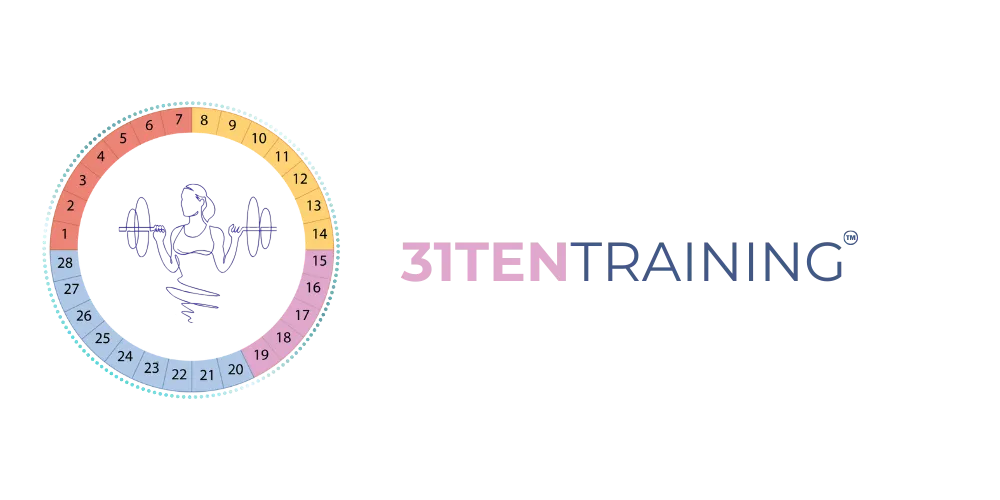
The 31TenTraining System teaches Females
How their body works so they can Train, Nourish, and Support themselves with Confidence.
The female reproductive system – explained, organized, and ready to help you unlock the power of your body’s natural design.
31TENLIFESTYLE
sync your cycle to everyday life
Live & Train With Your Cycle
Live & Train
With Your Cycle
For many women, health and fitness have been taught as something to push through – regardless of how the body feels from day to day. Low energy is ignored. Fatigue is overridden. Over time, this approach often leads to frustration, inconsistency, burnout, or the feeling that the body is working against you.
The truth is, the issue isn’t the body – it’s the method.
The menstrual cycle is a powerful biological rhythm that directly influences energy levels, mood stability, strength potential, recovery capacity, appetite, and nutrient needs. Throughout the month, natural fluctuations in estrogen and progesterone shape how the body responds to training, nourishment, and stress. When these hormonal shifts are ignored, many women experience plateaus, emotional strain, and a growing disconnect from their own physiology.
Living and training with your cycle offers a different approach – one rooted in understanding how the female body is designed to function.
Why Training With Your Menstrual Cycle Matters
Cycle-based training recognizes that the female body is dynamic, not static. Every phase of the menstrual cycle presents different physiological conditions, meaning the body’s capacity for intensity, recovery,
and output is constantly changing. Treating every day as identical ignores this reality and often leads to overtraining or under-supporting the body.
When women begin aligning their workouts and nourishment with their menstrual cycle, patterns become easier to recognize. Energy fluctuations start to make sense. Recovery improves. Expectations become more realistic. Instead of fighting natural rhythms, women learn how to work with them – reducing burnout while improving consistency.
This is not about doing less. It’s about doing what is appropriate for the body at any given time.
How Hormonal Fluctuations Affect Energy and Recovery
Estrogen and progesterone play a major role in how the body uses energy, manages stress, and repairs tissue. As these hormones rise and fall, they influence strength potential, coordination, motivation, and nutrient demands. Some phases naturally support higher output and resilience, while others require more restoration and nourishment.
Ignoring these shifts can leave women feeling depleted or discouraged. Honoring them, however, allows training intensity, food choices, and daily expectations to adapt in a way that supports both short-term performance and long-term health. Recovery becomes intentional rather than reactive, and progress feels steadier instead of forced.
What It Means to Train and Live With Your Cycle
Training and living with your cycle doesn’t mean rigid rules or constant tracking. It means creating a structure that adapts as your body changes. Instead of forcing the same workouts or eating patterns every day,
you learn when to push, when to support, and when to restore.
This cycle-aligned approach encourages consistency without rigidity. It replaces guilt with awareness and replaces guesswork with intention. As women become more attuned to their body’s signals, confidence
grows – not from doing more, but from making informed choices that align with their physiology.
Building Sustainable Health Through Cycle Alignment
Over time, cycle-aligned living builds trust between you and your body. That trust becomes the foundation for sustainable health, performance, and wellbeing. Rather than viewing the menstrual cycle as an obstacle,
it becomes a guide – one that helps you train smarter, nourish better, and live with greater awareness.
When you stop working against your body and start working with it, consistency becomes natural. Progress becomes sustainable. And health becomes something you can support long-term, not just chase for a season.
Menstrual & Follicular Phases: Restore, Then Rebuild
The menstrual and follicular phases mark the start of a woman’s cycle – a natural rhythm of restoration, growth, and preparation for peak performance. Each phase brings unique hormonal changes that affect energy, recovery, strength, and focus. Understanding these shifts allows women to train and nourish their bodies in alignment with their physiology, rather than working against it.
The menstrual phase is a time of rest, healing, and renewal. As the body sheds the uterine lining, estrogen and progesterone reach their lowest levels. Energy is naturally lower, and sensitivity may be heightened. This is the body’s signal to slow down. Gentle movement such as walking, stretching, or low-impact activity supports circulation without placing additional strain on the body. Nutrition during this time should be warming and grounding, with iron-rich foods that replenish what is lost and support recovery.
Menstrual Phase: Restore and Replenish
During menstruation, the focus is on honoring the body’s need for rest. Low hormone levels can make intense workouts feel exhausting, so the emphasis should be on restorative movement. Light activity supports circulation, reduces stiffness, and keeps the body engaged without overtaxing energy reserves.
Nourishment plays a key role in this phase. Warming, comforting foods that contain iron, protein,
and micronutrients help replenish energy and prepare the body for the next phase. Hydration is also critical,
as menstruation increases fluid and nutrient loss. By prioritizing restoration, women give their bodies the foundation needed to perform and recover in the weeks ahead.
Follicular Phase: Build Strength and Energy
As the cycle transitions into the follicular phase, estrogen rises and energy naturally increases. Mental clarity improves, motivation grows, and the body becomes more resilient. This phase is ideal for gradually increasing training intensity, exploring strength-based exercises, or introducing cardiovascular challenges. Workouts that felt difficult during menstruation are now more approachable and effective.
Nutrition should shift to support this heightened energy. Lighter, fresh, and nutrient-dense foods enhance digestion and fuel performance. Prioritizing protein, complex carbs, and colorful fruits and vegetables provides the energy needed to build strength and prepare for peak phases later in the cycle.
Why Rest and Build Work Together
The menstrual and follicular phases work as a natural rhythm: first restore, then build. Respecting this sequence ensures that the body recovers fully before higher-intensity activity is introduced. Ignoring these signals can lead to fatigue, frustration, or inconsistent results.
Aligning training and nutrition with these phases fosters awareness, consistency, and confidence.
By understanding when to rest and when to push, women develop trust in their bodies’ signals. This creates a sustainable approach to performance and wellbeing, setting the stage for optimal results throughout the rest of the cycle.
Ovulation Phase: Peak Performance and Energy
Ovulation Phase:
Peak Performance and Energy
Ovulation is the body’s peak performance phase, occurring roughly in the middle of the menstrual cycle.
During this time, estrogen reaches its highest levels, signaling a surge in energy, strength, and mental clarity. Women often feel more social, motivated, and confident, making it an ideal window to challenge themselves physically and mentally.
This phase is an opportunity to take full advantage of your body’s natural capacity. Whether it’s high-intensity interval training, heavy lifting, fast-paced cardio, or skill-based exercises, ovulation supports peak output and optimal recovery. Energy is high, coordination improves, and the body responds efficiently to both strength and endurance work.
Training During Ovulation
With peak energy and resilience, ovulation is the perfect time to push limits safely. Workouts can be structured to maximize performance, build strength, or test personal bests. The body’s responsiveness to training is elevated, making gains more achievable during this phase.
It’s also a chance to try new challenges – introducing complex movements, competing, or intensifying your usual routine. Listening to your body is still key: while energy is higher, overexertion should be avoided by pairing high-intensity sessions with adequate recovery strategies.
Nourishing for Peak Performance
Nutrition during ovulation should support energy, recovery, and hormone balance. Focus on protein-rich meals, healthy fats like avocado or nuts, and vitamin-dense fruits such as citrus or berries. These nutrients fuel workouts, aid muscle repair, and help maintain immunity during high-performance days.
Hydration is equally important. Increased activity and metabolism during this phase demand consistent water intake to optimize performance and recovery. Pairing nutrient timing with training ensures the body has the fuel it needs exactly when it needs it.
Why Ovulation Matters in Your Cycle
Ovulation is not just about fertility – it’s a natural high point in the menstrual cycle that signals strength, resilience, and optimal function. Aligning workouts and nutrition with this phase allows women to take advantage of their body’s natural potential, maximize performance, and build confidence in their physical abilities.
Recognizing this peak phase encourages intentional living: knowing when to push, when to challenge yourself, and when to fuel appropriately. Over time, these insights contribute to better performance, smoother recovery, and a deeper connection to your body’s natural rhythm.
Luteal Phase: Transition and Reflection
Luteal Phase:
Transition and Reflection
The luteal phase occurs after ovulation and marks the body’s transition toward the next menstrual cycle.
During this phase, progesterone rises while estrogen gradually declines. These hormonal shifts can influence energy, mood, coordination, and recovery capacity. Many women notice slight fatigue, increased appetite,
or emotional sensitivity, which is a natural signal to adjust both training and nutrition.
Understanding the luteal phase allows women to approach this period intentionally. Instead of pushing through like other phases, workouts and daily activities can be adapted to match the body’s needs. This approach reduces fatigue, supports hormonal balance, and prevents frustration that often arises when energy is ignored.
Training During the Luteal Phase
Energy and strength are generally lower in the luteal phase, making it the ideal time to focus on
moderate-intensity training. Activities such as steady-state cardio, moderate weightlifting, long walks,
or stretching sessions help maintain consistency without overtaxing the body.
It’s also a great phase for recovery-focused practices: mobility work, foam rolling, and mindful movement can help reduce tension and prepare the body for the upcoming menstrual phase. Listening to the body’s cues ensures that training remains effective without contributing to burnout.
Nourishing for Hormonal Support
Nutrition during the luteal phase should support both energy and hormonal stability. Focus on complex carbohydrates, magnesium-rich foods like leafy greens and nuts, and lean proteins to reduce PMS symptoms and maintain steady energy. Warm, comforting meals can also help manage bloating and support overall wellbeing.
Hydration remains important, as hormonal changes can affect fluid balance. Timing nutrient-dense meals around activity ensures recovery is supported and energy levels are optimized throughout the phase.
Why the Luteal Phase Matters in Your Cycle
The luteal phase is a period of reflection and preparation, signaling the body to slow down before the next menstrual cycle begins. Recognizing this natural ebb in energy allows women to adjust expectations,
prioritize self-care, and maintain consistency in training and nutrition without pushing too hard.
By working with the luteal phase rather than against it, women cultivate awareness, resilience, and confidence. This approach ensures that performance, recovery, and hormonal balance remain supported throughout the cycle, setting the stage for a smoother, more empowered start to the next menstrual phase.
Watch the Free Training:
"The 7 Keys to Understanding the Female Reproductive System".
Learn the FRS In-Depth with
The FLOURISH Course™
A clear education on the Female Reproductive System and how it influences energy, mood, training, and overall health. Whether you’re just beginning or looking to deepen your understanding, The FLOURISH Course™ gives you the knowledge and tools to confidently support the female body
and apply what you learn in everyday life.

COMPANY
CUSTOMER CARE
LEGAL
FOLLOW US


Copyright 2026. 31TEN Training. All Rights Reserved.

100% of women
surveyed agree
The FLOURISH Course™
will help females with anxiety.
Over 90% of women surveyed agree
The FLOURISH Course™
is a valuable tool for
mental health professionals.
More than 80% of
women surveyed agree
The FLOURISH Course™
will help females thrive in
sports & beyond.
Her time to Flourish is now!
Over 90% of the women surveyed agree
The FLOURISH Course™
completely changed how they
approach their exercise routine.
Copyright© 2026 31TEN TRAINING™
The FLOURISH Course™ is a trademark of 31TEN TRAINING.
By visiting this page, you agree to terms and conditions, & privacy policy
This site is not a part of the Facebook website or Facebook Inc. Additionally, This site is NOT endorsed by Facebook in any way. FACEBOOK is a trademark of FACEBOOK, Inc.
DISCLAIMER: Any results stated on this page or discussed in our Free Training Video or Free downloads, Free Strategy Sessions, The FLOURISH Course™, or any other videos or documents we share, are sourced from our personal case studies and experience. Please understand results will vary. We’re not implying you’ll duplicate them (or do anything for that matter). The average person who buys “how to” information gets little to no results. We’re using these references for example purposes only. Your results will vary and depend on many factors including but not limited to your background, experience, and work ethic.
There is risk with any purchase, and massive and consistent effort and action on your part may be a factor.
If you’re not willing to accept that, please DO NOT PURCHASE ANY ITEMS OR ENROLL IN ANY PROGRAMS FROM 31TEN Training
FAQS
What does an IT consultant do?
An IT consultant is a professional who provides expert guidance to businesses regarding their technology strategies. They analyze your current IT systems, assess your needs, and recommend solutions that align with your business goals. Whether it's optimizing operations, implementing new technologies, or enhancing cybersecurity, an IT consultant ensures your technology investments drive growth and efficiency.
How do I know if my business needs IT consulting?
If you're facing challenges with your current IT setup, such as frequent system issues, security concerns, or difficulties integrating new technologies, it's a good indication that you could benefit from IT consulting. Additionally, if you're planning to scale your business or undergo a digital transformation, an IT consultant can provide valuable insights and strategies to ensure a smooth and successful transition.
Are IT consultant services tailored to my business?
Absolutely. At [Your Name] IT Consulting, we believe in a personalized approach. We understand that every business is unique, so our services are tailored to your specific needs and objectives. We collaborate closely with you to assess your requirements and develop strategies and solutions that address your challenges directly. Our aim is to deliver results that align perfectly with your business goals and foster long-term success.